

Day 08 of 40 / Integrity
Emotional Eating
Notice the emotion behind the habit, care for what you need, and choose a response you can practice with God’s help.
Free printable + fillable PDF · 3 pages
In your book: Day 8, pages 26–28
Scripture: Philippians 4:8–9
“Reflect and make a plan for the emotions that you are most likely to regulate with food and drink right now.”
— Faithful Fitness, Day 8
A note from Coach Alex
Bring the real moment to God.
What happened just before you reached for food? Start with that moment. Name what you feel, consider what you need, and ask God to help you choose a response you can practice.
Open the Day 8 audio recording
Read the full companion
Hey there. Coach Alex here.
Today we're talking about emotional eating. I want to help you take the assignment in Day 8 and put it into practice in one ordinary moment of your day.
Maybe it's the evening when the house finally gets quiet. Maybe it's right after a hard conversation, or when you close your laptop and realize how tired you are. You find yourself reaching for something to eat, and there's more happening than you first noticed.
Start there. What was happening? What were you feeling? You can bring an honest answer to God.
In Philippians four, verses eight and nine, Paul directs our attention toward what is true, good, and worthy of our thoughts. Then he tells us to put what we've learned into practice. That gives us something to do with this moment. We can pay attention to the thought we're dwelling on and choose a response that honors God.
You don't have to pretend you're cheerful when you're sad. You can say, Lord, I'm lonely. I'm angry about what happened. I'm overwhelmed, and I need help. Start with what is true.
The assignment in the book is to reflect on the emotions you tend to respond to with food and make a plan. Choose one situation to work with today. You don't need to figure out every eating habit you've ever had.
The resource on this page is called the Emotions and Eating Plan. It gives you a guide, a page to write your own plan, and a reminder card you can keep nearby. Let's walk through how to use it.
First, notice the feeling. Give it an ordinary name. Sad. Frustrated. Lonely. Anxious. If you aren't sure, write that down. You can become more specific as you learn.
Second, consider what your body needs. Have you missed a meal? Are you hungry? Worn out? Physical hunger and a difficult emotion can happen together. If you need food, eat. You don't have to finish a worksheet or feel peaceful before you nourish your body. Prayer and a meal can belong in the same moment.
Third, bring the situation to God. Read today's passage again. Ask, what is true here? What good thing can I put into practice? You might pray, Father, I feel alone tonight. Help me ask for the connection I need.
Fourth, choose one response that fits the situation. The book gives you examples: a short prayer walk, a conversation with a trusted friend, or writing out a psalm. You might also need rest, help with a task, or a conversation you've been avoiding. Choose something you can actually do.
Here's a made-up example. You're alone in the evening, scrolling on your phone and reaching for snacks. You notice you're lonely, and you also haven't eaten dinner. Your plan could be: when I notice that lonely feeling in the evening, I'll make dinner, pray honestly, and message a trusted friend to arrange a time to talk.
That plan cares for your body and makes room to address the loneliness. It doesn't depend on the feeling disappearing right away.
Now make the plan yours. Finish this sentence: when this situation happens, I will do this specific thing. Write down who you can ask for support. If your first option isn't available, choose a simple backup. If your friend can't talk, you could write an honest prayer and arrange another time to connect.
Keep that plan somewhere useful. When you try it, notice what helped and what needs adjusting. If you only recognize the pattern after you've eaten, you can still learn from that moment. Write a sentence about what was going on and prepare for the next opportunity. Keep caring for yourself, including your next regular meal.
If you're keeping the food journal from Day 4, one short context note is enough: lonely evening; needed dinner and connection. You don't need a second detailed record of everything you eat.
For the full video devotional with me, join the CORPS. You'll find the link on this page, along with all forty video devotionals inside the membership. If you'd like personal coaching to put a practical habit plan into action, you can also explore Jumpstart.
If eating often feels out of control or causes significant distress, speak with a qualified health professional. Habit coaching can support everyday practice; eating difficulties may also need clinical care. Asking for that help is a faithful step.
For today, choose one situation and write one response you can practice. You can come to God with the emotion you're actually feeling and begin right there.
Let's pray. Father, thank You that I can bring You the truth about my day. Help me understand what I'm feeling and care for the body You've entrusted to me. Direct my attention toward what is true and good. Give me courage to ask for help and put what I'm learning into practice. Teach me to seek Your comfort and trust You with what remains difficult. In Jesus' name, amen.
Let's get after it.
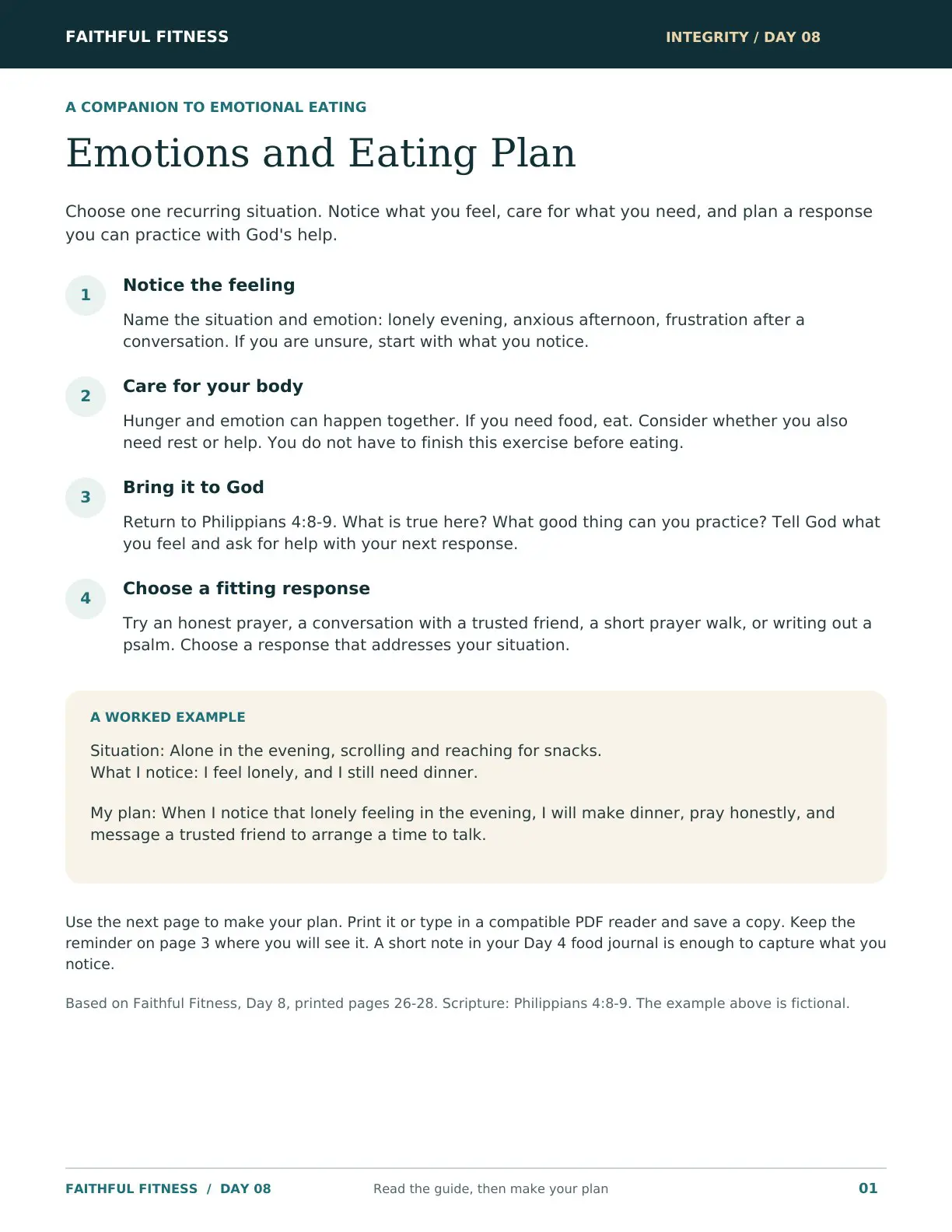
Today’s practice
Choose one situation to practice with.
01
Notice the feeling
Name the situation and emotion: lonely evening, anxious afternoon, frustration after a conversation. If you are unsure, start with what you notice.
02
Care for your body
Hunger and emotion can happen together. If you need food, eat. Consider whether you also need rest or help. You do not have to finish this exercise before eating.
03
Bring it to God
Return to Philippians 4:8-9. What is true here? What good thing can you practice? Tell God what you feel and ask for help with your next response.
04
Choose a fitting response
Try an honest prayer, a conversation with a trusted friend, a short prayer walk, or writing out a psalm. Choose a response that addresses your situation.
Here’s what a plan can look like
The situation
Alone in the evening, scrolling and reaching for snacks.
What I notice
I feel lonely, and I still need dinner.
My planned response
When I notice that lonely feeling in the evening, I will make dinner, pray honestly, and message a trusted friend to arrange a time to talk.
This fictional example cares for the body and makes room to address the loneliness. The feeling may take time to change.
Find a response that fits
What might help in your situation?
Use these as starting points for your own plan. Food, rest, connection, and prayer can each have a place in caring for what you need.
Anxious or overwhelmed
Pray about the specific concern, then write down one manageable next action. If you would find it helpful, take the short prayer walk suggested in the book.
Lonely or sad
Tell God what feels difficult. Reach out to a trusted person, or write out a psalm and an honest prayer. If someone cannot talk now, arrange another time.
Frustrated or angry
Name what happened before replying or making another decision. Ask God for wisdom, and choose a calm time for the conversation you need.
Bored or worn out
Consider whether you need something engaging to do, rest, or help with what is on your plate. Choose an action that fits. If you need food, include it.
A few practical questions
What if I am hungry and upset at the same time?
You can care for both. Eat when you need food, and make room for the emotion too. You do not need to prove that your hunger is separate from your feelings or become calm before eating. Follow any nutrition guidance you have received from your care team.
What if I only notice after I have eaten?
You can still learn from what happened. Write one honest sentence about the situation, choose a response to try next time, and continue with your regular meals. Review the plan without turning the moment into a verdict on your character.
Do I need another food journal?
No. If you are using the Day 4 Food Honesty Journal, add a short context note there. Use this worksheet to plan one response and review what you learned. Keep it simple enough to use.
When should I ask for professional support?
If eating often feels out of control or causes significant distress, speak with a qualified health professional. Habit coaching can support everyday practice; eating difficulties may also need clinical care. If you are already receiving care, keep following your treatment team’s guidance.
Bring it to God
What is true in this moment?
Read Philippians 4:8–9 again. What are you feeling? What thought keeps returning? What good thing can you put into practice as you bring the situation to God?
Father, help me understand what I’m feeling and care for what I need. Direct my attention toward what is true and good. Give me courage to ask for help and practice a faithful response. In Jesus’ name, amen.
Put your plan into practice
Want personal help with your habits?
Bring the situation you want to work on and the response you would like to practice. Explore Jumpstart for personal coaching with Coach Alex as you build habits that fit your daily life.